Correlating power measurements with cellular IoT network behavior
Correlating power measurements with cellular IoT network behavior
The challenge of low-power cellular IoT development
Developing battery-powered IoT devices with cellular connectivity presents an engineering challenge: understanding exactly where and when power is consumed during cellular network events. While power measurement tools can capture current draw with microsecond precision, the real breakthrough comes from correlating those measurements with the cellular protocol events that trigger them.
For engineers working on long-life IoT applications, from medical sensors to asset trackers, the ability to visualize power consumption alongside network signaling isn’t just convenient, it’s important for achieving multi-year battery life.
Why power save mode analysis matters
Cellular IoT devices spend most of their life in low-power states. Features like Power Saving Mode (PSM) and extended Discontinuous Reception (eDRX) can reduce average current consumption from milliamps to microamps, but only when properly configured and verified.
The challenge is that these power-saving mechanisms comprise complex timing relationships between the device and the network. An incorrect set of eDRX cycles or unexpected network paging can increase power consumption by orders of magnitude. Without synchronized visibility into both power draw and protocol behavior, detecting these issues becomes guesswork.
Integrated power and signalling event analysis
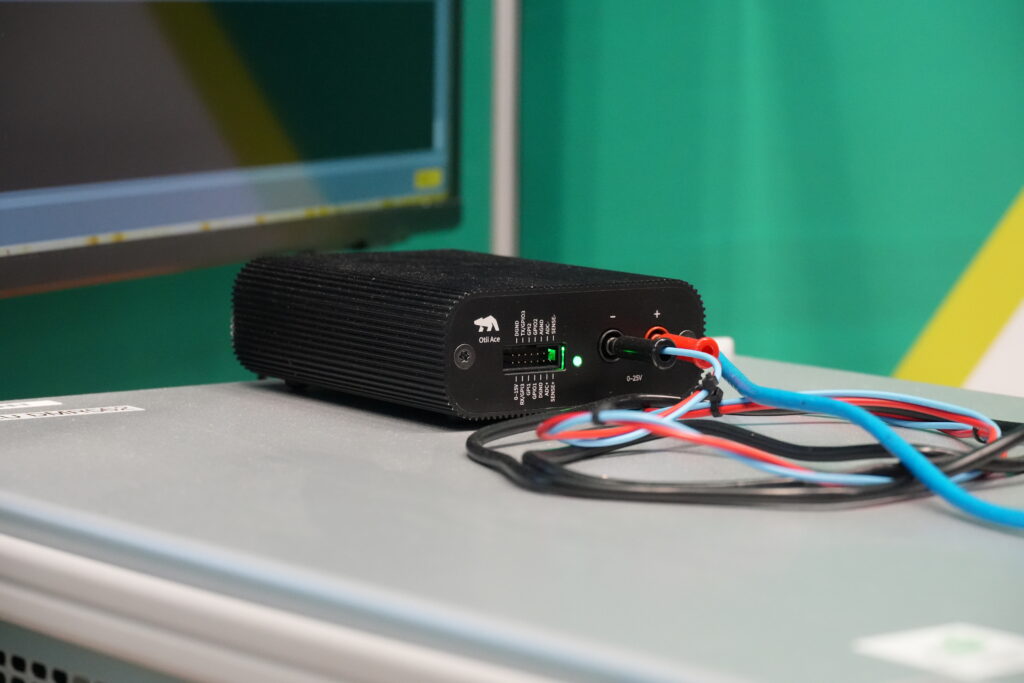
The Otii Product Suite, comprising Otii Ace Pro hardware and Otii software, provides the foundation for complete power profiling of embedded devices. But the device’s power profile alone tells only part of the story. This is where Otii’s external log import capability transforms power analysis from measurement into insight.
Anritsu MT8000A signalling logs
Using the Otii TCP server and Python automation, engineers can import timestamped log data from external sources, including cellular network analyzers like the Anritsu MT8000A, directly into their Otii project. This creates a unified timeline where power consumption curves match exactly with network events.
For cellular IoT testing, this means you can:
- Verify PSM entry and exit timing by seeing exactly when the modem enters deep sleep, and correlate with expected network timers.
- Analyze eDRX cycles during paging windows versus sleep periods.
- Characterize and understand how uplink power control affects battery drain at different simulated distances from the base station.
- Debug unexpected wake events by identifying protocol-level causes for power anomalies.
The MT8000A provides complete control over these cellular network features:
- PSM timers configuration (T3324 active timer, T3412 periodic TAU timer)
- eDRX cycle lengths and paging time windows configuration
- Uplink transmission power requirements
- Paging and mobility scenarios
- Abnormal scenarios testing (network rejection, timer mismatches)
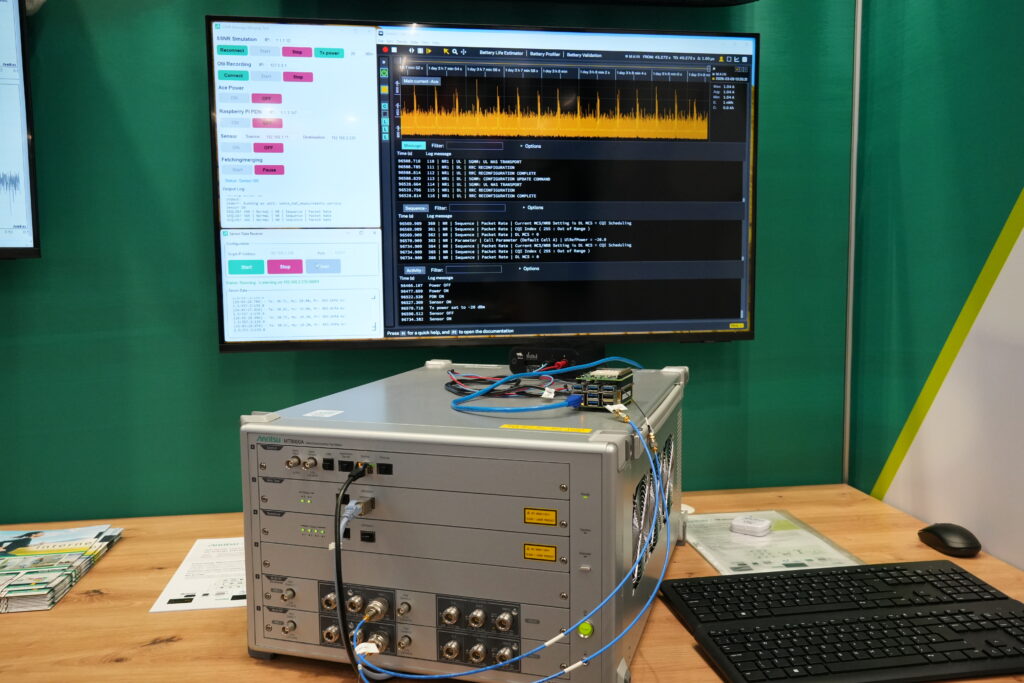
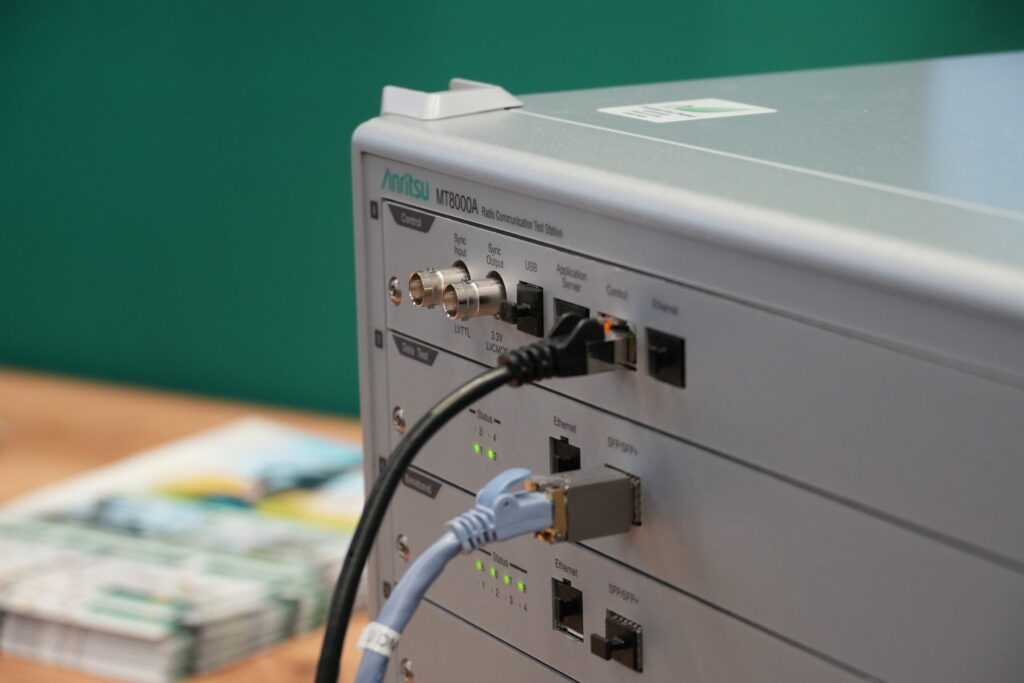
When working with a base-station simulator such as the Anritsu MT8000A, engineers can fully control the cellular environment and emulate 5G RedCap, LTE-M, and NB-IoT networks. By importing the MT8000A’s protocol logs into Otii, every network-level event becomes visible alongside its power signature.
Importing network signaling data to Otii
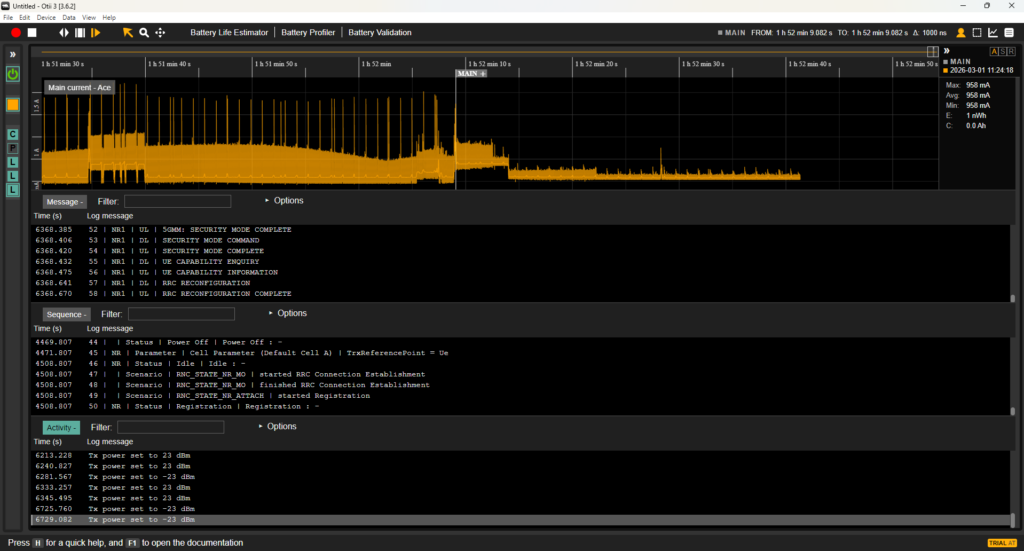
Text-based logs from the MT8000A can be imported in real time while a DUT is being measured under specific network parameter settings. Using a Python script and the Otii API, logs from the MT8000A are read and visualized in the Otii Desktop App via the Otii TCP Server. This creates an additional measurement channel in your Otii project that displays network events, connection states, transmission bursts, sleep cycles, and protocol messages, all synchronized with their corresponding power measurements, see picture below. This application note explains in detail how to execute this import and includes an example Python script to get you started.
Accelerating product development in cellular IoT
The synchronized view of network events and power behavior enables engineers to quantify the energy cost of specific operations, from single sensor data transmissions to registration and handover events. Engineers can compare different network configurations to identify optimal power-saving settings, validate that device behavior matches design specifications, and automate regression testing to catch power issues early in development. Let’s use the power path loss effect on power behavior as an example. While stepping the MT8000A through various path loss values during device transmission, Otii captures the current consumption profile for each condition. The Otii desktop application screenshot above shows how TX power changes on the base station side affect the DUT’s power consumption. This type of sync produces a complete power-versus-distance characterization that directly informs battery life estimates across different cellular IoT deployment scenarios.
This approach transforms a fragmented, manual process into a streamlined validation workflow.
Conclusion
Achieving years of battery life in cellular IoT devices requires more than good hardware design; it requires a profound understanding of how network behavior affects power consumption. By combining Otii’s precision power measurement with synchronized cellular protocol logs from instruments like the Anritsu MT8000A, engineers gain the visibility needed to optimize every microamp, from development to production.
The result: Embedded electronics and Internet of Things (IoT) products that meet their battery life targets, reduce field failures, and deliver the reliability that connected applications demand.